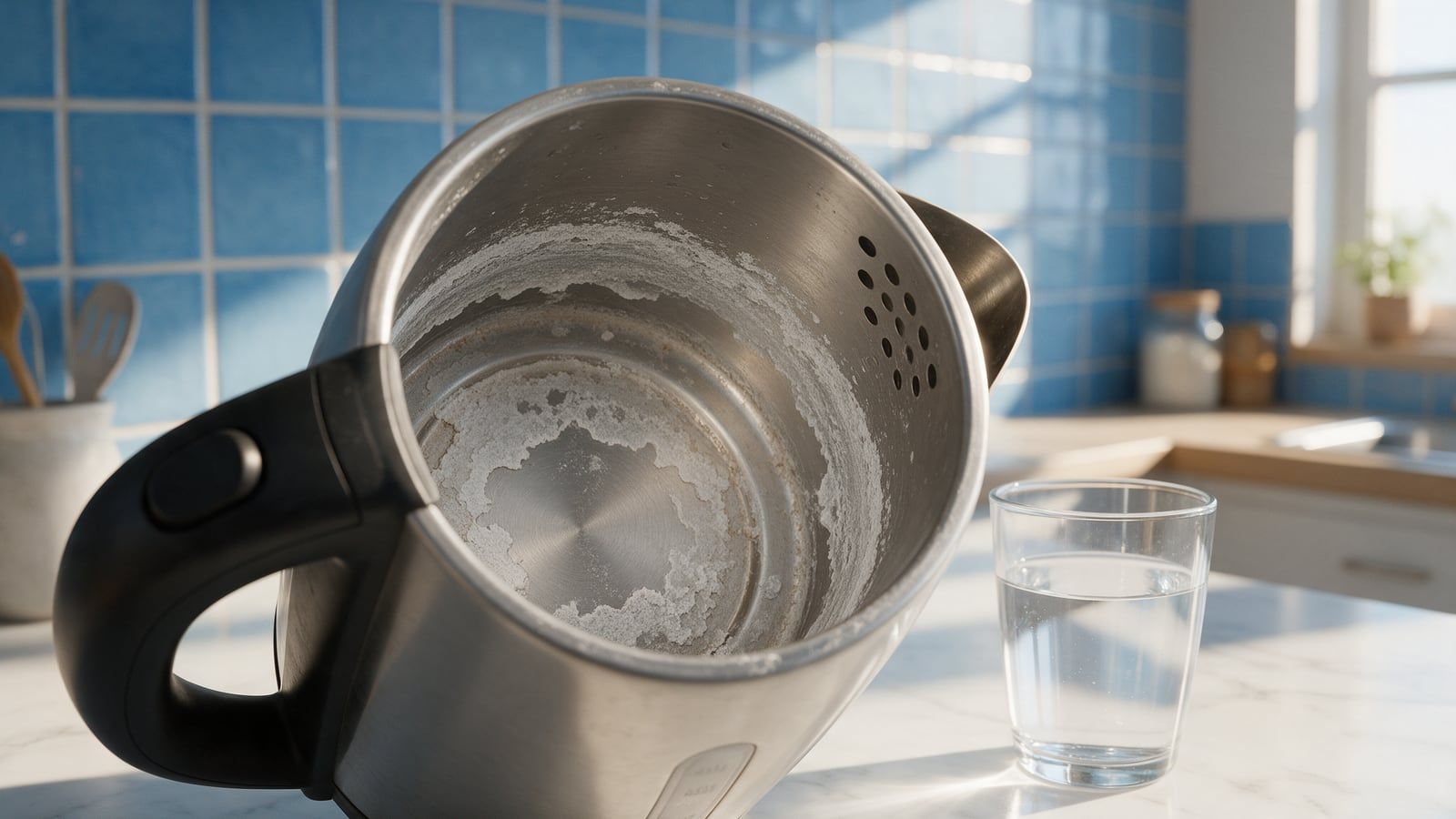
Scale on the kettle. Cloudy glasses. Dry skin. If that sounds familiar, your water is sending a signal: it’s hard. It isn’t you or your kettle — it’s the island.
Why is Cyprus water hard?
Much of the island sits on limestone. Water passes through it, picks up calcium and magnesium, and reaches your tap “hard”. When the water is heated or evaporates, those minerals stay behind as the limescale you know.
5 signs your water is hard
- Scale on the kettle and taps
- Cloudy glasses after the dishwasher
- Dry skin and hair
- Soap won’t lather
- Appliances that keep breaking down
What you can do
The right solution depends on where the water bothers you:
- Limescale all over the house (pipes, water heater, washing machines): a water softener on the main supply keeps scale out — one installation, the whole house.
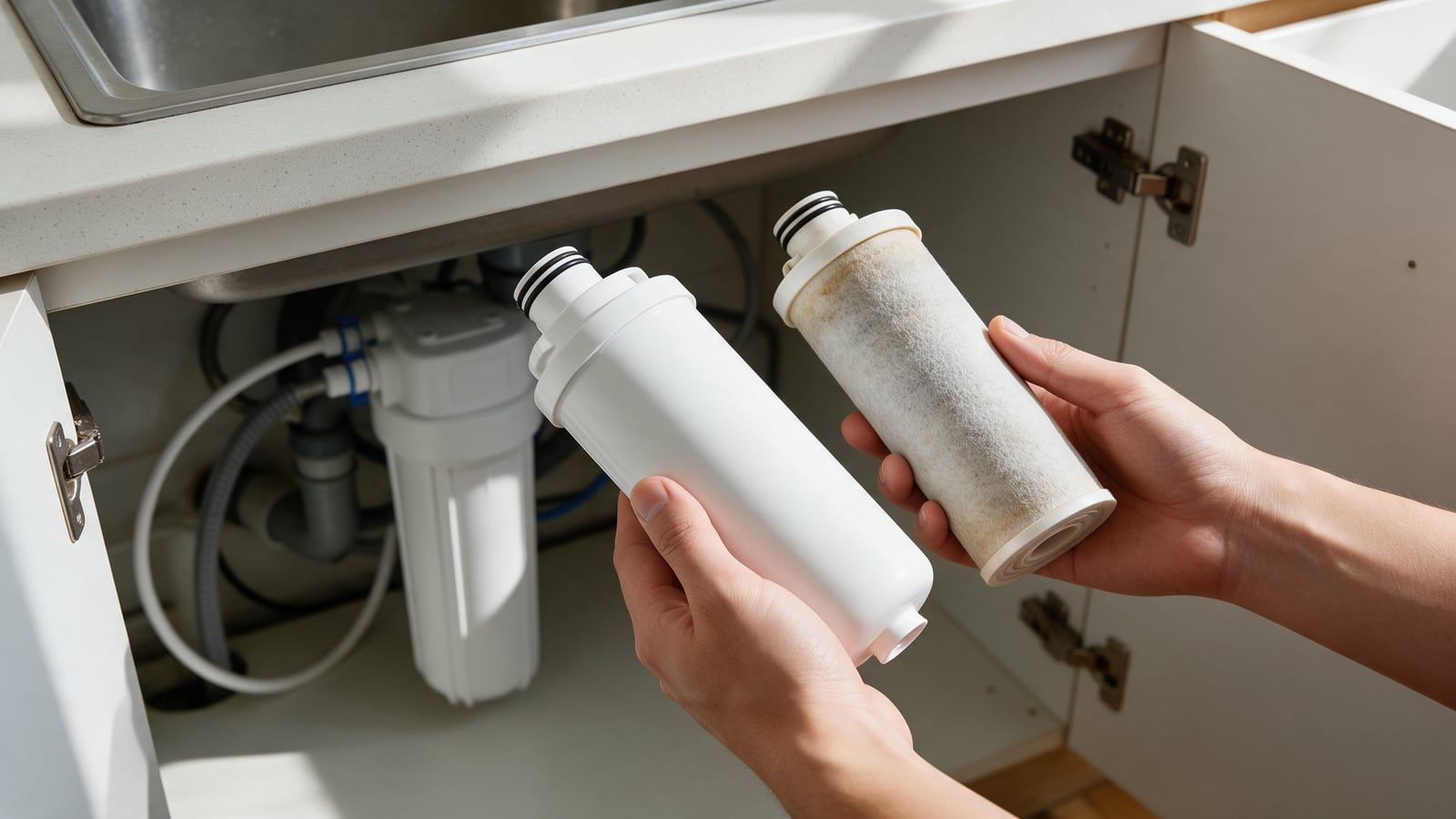
- No salt, no waste water: the anti-scale filter doesn’t remove hardness; it turns it into crystals that don’t stick, with no salt, chemicals or backwash.
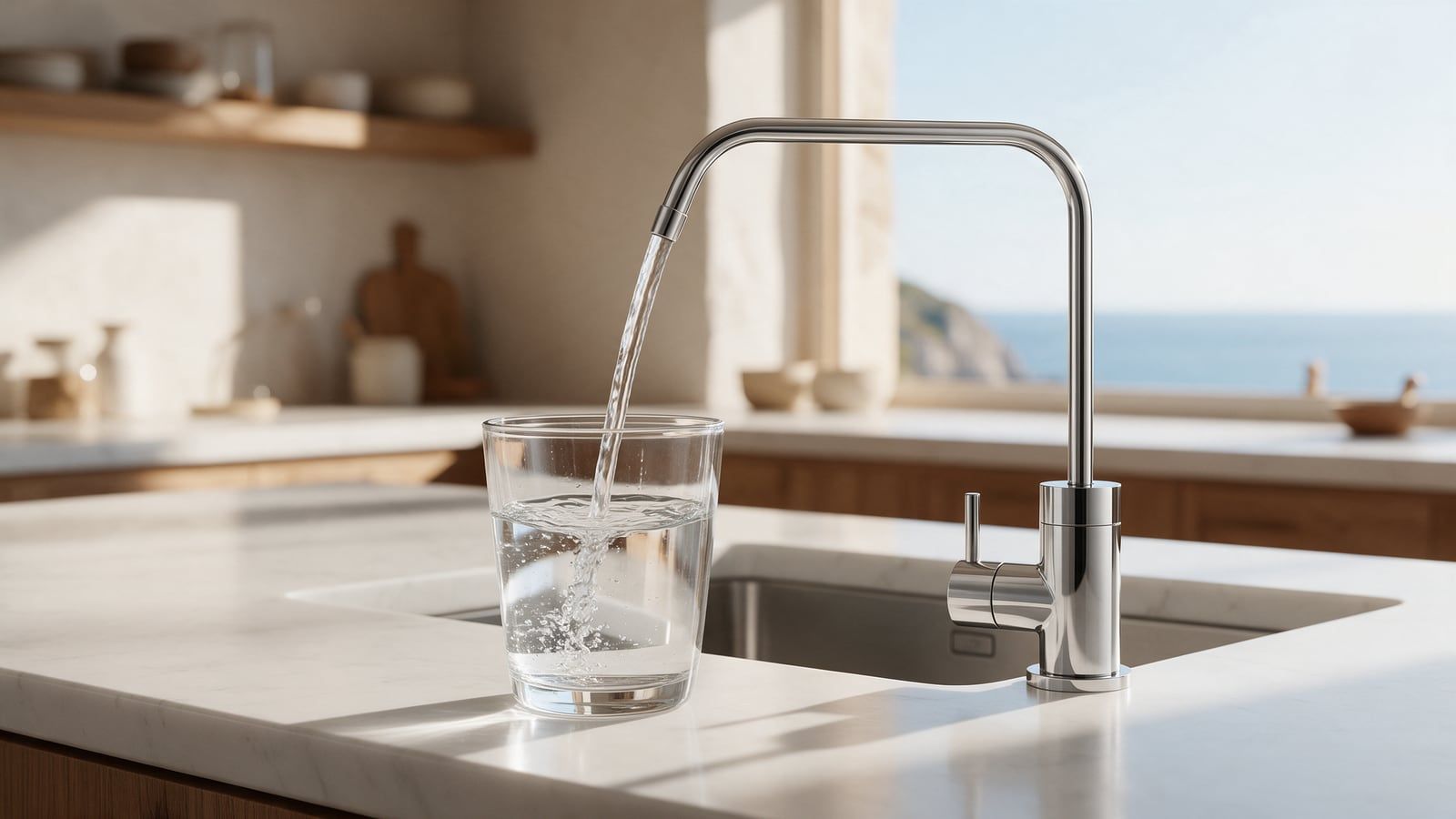
- Drinking water in the kitchen: HQ7 reverse osmosis filters down to 0.0001 µm and lowers the dissolved salts (TDS) in the water you drink.
- Skin and hair: a shower filter reduces chlorine — but not limescale.
Not sure where to start? Take the “Find my filter” quiz — 5 questions, 2 minutes.
First we measure
Every home has different water. During the free water check we come to your home, measure hardness and TDS, and explain what the numbers mean. Then we recommend only what your water actually needs.